December 16, 2025
Europe’s new Soil Monitoring Directive: finally treating soil like the living system it is
Soil doesn’t shout. It doesn’t trend. It just quietly holds everything together: our food, our water cycles, our climate goals, and the biodiversity we do notice above ground.
That’s why I’m genuinely excited about the EU’s new Soil Monitoring and Resilience Directive (EU) 2025/2360. It was adopted on 12 November 2025, published on 26 November 2025, and entered into force on 16 December 2025.
For the first time in a law act, the Directive frames “healthy soils” as soils in good chemical, biological, and physical condition—able to deliver ecosystem services, including being a habitat for biodiversity.
Why this Directive matters
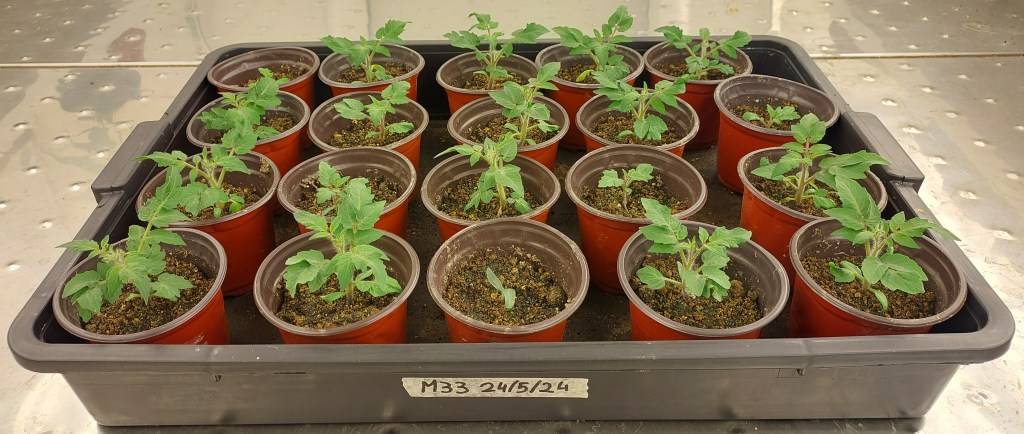
We talk a lot about plant health—yields, nutrient density, resilience to drought, disease pressure. But the uncomfortable truth is: plants can only be as healthy as the soil they’re rooted in.
Healthy soil = healthier plants
This is not just a slogan, but a biological reality.
- Soil organisms drive nutrient cycling, turning nutrients into forms plants can actually absorb.
- A diverse soil ecosystem supports plant growth over time by keeping key soil functions running (decomposition, aggregation, nutrient transformations).
- Healthy soil microbiomes are increasingly associated with improved nutrient uptake and greater disease resistance in plants.
When soil health is degraded, it becomes more difficult and costly to maintain, often replaced by quick fixes rather than lasting resilience.
The hard reality: most EU soils are already in trouble
The Directive doesn’t sugarcoat where we are: the EU estimates that 60–70% of EU soils are degraded.
Degradation isn’t only erosion or compaction. It includes loss of soil organic carbon, loss of biodiversity, and loss of biological activity—all of which are basically red flags for long-term fertility.
The novelty: soil biodiversity is no longer an afterthought
The Directive doesn’t just say soil biodiversity is important—it makes it measurable.
In Annex I, Part C, it explicitly includes a descriptor for “loss of soil biodiversity” and points to DNA-based monitoring (mass DNA sequencing for fungi and bacteria) as a core approach.
It even goes further by listing optional biodiversity indicators Member States may add—things like sequencing other groups (archaea, protists, animals), PLFA analysis, nematodes, earthworms, springtails, ants, and soil respiration.
And importantly: Member States must actually measure the soil biodiversity descriptor in at least 5% of the total soil sampling points.
That “5%” might sound small, but from a policy perspective it’s huge: it formally brings the living part of soil into the monitoring framework, not just chemistry and physics.
A shared monitoring framework (and a public data direction)
Another big step: the Directive requires Member States to establish a soil monitoring framework that is periodic, coherent, and accurate—covering soil health and also soil sealing and soil removal.
It also points toward a digital soil health data portal, with rules for how data can be shared and checked before it’s made public.
This matters because soil has been a patchwork topic across Europe: different methods, different baselines, different reporting. Comparable data is the foundation for smarter data-driven decisions and actions
What Member States still need to do (this is where it gets real)
A Directive is not “done” when it’s published. It becomes real when countries implement it.
Member States have to transpose it into national law by 17 December 2028.
But transposition isn’t just paperwork. The Directive expects countries to build the machinery to make the directive active, including:
- Designating competent authorities, including at least one for each soil district.
- Monitoring soil health across soil units and soil sealing/removal across soil districts.
- Using EU-wide “descriptors” and setting non-binding sustainable target values plus operational trigger values that signal when support measures are needed.
- Building support systems for land managers—advice, training, access to information, and clarity on funding instruments.
In other words: monitoring is only the start. Member States will need staffing, labs, harmonised methods, data analysis capacity, farmer-facing advisory capacity, and budgets.
EU Directive page (EUR-Lex): https://eur-lex.europa.eu/legal-content/EN/TXT/?uri=OJ:L_202502360

FAO – Agriculture and soil biodiversity: https://www.fao.org/agriculture/crops/thematic-sitemap/theme/spi/soil-biodiversity/agriculture-and-soil-biodiversity/en/
 Sebastiano Nigris